Gymnastics · Careers
How to build a gymnastics career in Nigeria
From a first cartwheel at school to the African Games and the Olympics: every step, the safety rules, how gymnasts fund themselves and the careers in coaching and judging.
Advertisement
Careers in gymnastics
Your road to competitive gymnastics
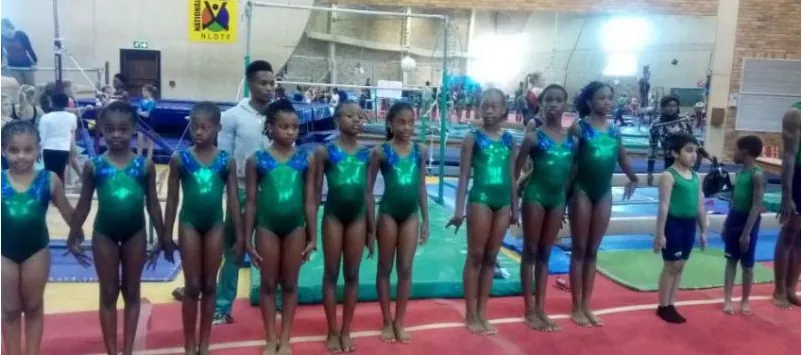
On 26 September 2026, 900 pupils from 90 schools in the Federal Capital Territory filled the Package B Gymnasium at the Moshood Abiola National Stadium in Abuja for a Catch Them Young gymnastics festival. Somewhere in that hall may be Nigeria's next Olympian. The first one, Uche Eke, competed at Tokyo 2020 after winning Nigeria's first African Games gymnastics gold in 2019.
This page is for young gymnasts, parents, PE teachers and coaches. It explains how to start, artistic and rhythmic gymnastics, how talent is found and selected in Nigeria, the university and diaspora routes, how gymnasts fund themselves, how to stay safe, and the careers around the sport: coach, judge and club owner. Every fact was checked on 1 October 2026.
One honest truth first: gymnastics is still a small sport in Nigeria. For many years poor facilities, few sponsors and a lack of national competitions held it back, and no Nigerian earns a living from competing today. But the federation now has a national plan, international partners and a target of 30,000 young gymnasts, and that means jobs for coaches as well as chances for athletes.
Career facts · Checked 1 October 2026
Nigerian gymnastics careers in numbers
-
1975
Federation founded
The Gymnastics Federation of Nigeria, affiliated to the FIG.
-
2019
First African Games gold
Uche Eke on the pommel horse in Rabat.
-
30,000
Young gymnasts targeted
The federation's goal by the end of 2028.
-
1,000+
Coaching positions planned
Also targeted by the end of 2028.
The pathway at a glance
Six stages from first tumble to the Olympics
Ages are a guide, not a rule. Every gymnast develops at a different pace, and a good coach plans for the long term.
Age 3 to 7
Play, tumble and move
Clubs in Lagos take children from age three. Rolls, balance and fun come first.
Age 6 to 12
School festivals and club training
The federation's Catch Them Young festivals bring school pupils into the sport, with Foundation, Development and Advancement levels.
Age 8 to 16
Club competitions and levels
Club events such as Gymfest in Lagos run competitions from pre-level to level 7.
Age 12 to 18
National Youth Games and trials
Gymnastics is on the National Youth Games programme; national trials pick teams for international events.
Age 16 and up
African and Commonwealth level
African Championships, African Games and Commonwealth Games. Eke qualified for Tokyo through the 2021 African Championships.
Age 18 and up
University and the world stage
Eke combined an engineering degree with gymnastics at the University of Michigan before Tokyo 2020.
Step by step
Eight steps to a gymnastics career
Follow these in order. Each step builds on the one before it.
Start young, and start with the basics
Gymnastics rewards an early start. Uche Eke began at the age of three, and Nigerian junior Stephanie Onusiriuka started training at two in Lagos. Look for a club or a school programme where a qualified coach teaches rolls, handstands, cartwheels and safe landings before anything difficult. The federation can point you to clubs; see our contact page.
Join a festival or a club programme
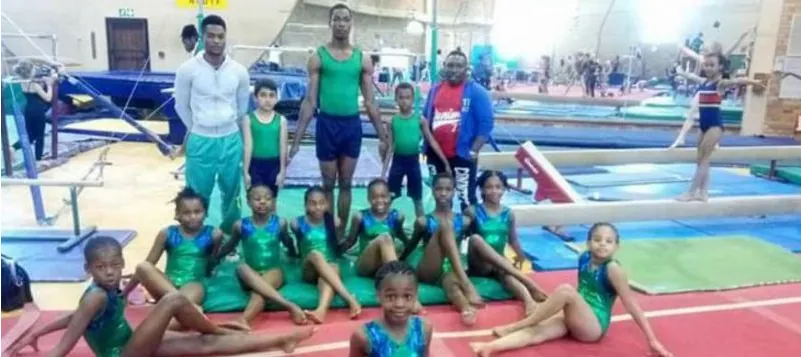
The Gymnastics Federation of Nigeria (GFN), founded in 1975, runs Catch Them Young festivals for school pupils. Editions have been held in Edo State (45 clubs and 450 children), the North-East and Abuja, where 90 FCT schools each presented 10 pupils in September 2026. Ask your school to take part. In Lagos, club events such as Gymfest, organised by Tee Tumblers Gymnastics Club, gather hundreds of young gymnasts from age three.
Choose your discipline
Artistic gymnastics is the best known in Nigeria. Women compete on vault, uneven bars, balance beam and floor; men on floor, pommel horse, still rings, vault, parallel bars and horizontal bar. Rhythmic gymnastics uses hoop, ball, clubs and ribbon; Jade Faulkner became the first Nigerian woman in rhythmic gymnastics at the Commonwealth Games in 2018. Your coach will help you see where your strength, flexibility and style fit best.
Climb the levels and compete
Gymnasts progress through skill levels and compete at each one. The GFN's school programme has three: Level One Foundation, Level Two Development and Level Three Advancement. Club competitions run from pre-level upwards. Keep every score sheet: it is your record of progress.
Shine at the National Youth Games and national trials
Gymnastics is part of the National Youth Games. At the 2025 Games in Asaba, Onusiriuka won three gold and two silver medals and was named best all-round gymnast. The federation also holds open national trials: in September 2017 a two-day trial selected the team for the World Championships.
Reach African and Commonwealth level
Nigeria's big gymnastics moments came at continental level. Nigeria's men won team bronze at the 2015 African Games; in 2019 Eke won pommel horse gold and parallel bars bronze in Rabat, and the women's team won bronze. Eke's all-around bronze at the 2021 African Championships in Cairo took him to Tokyo 2020, where he finished 58th in the all-around. The next African Games are in Cairo from 20 January to 7 February 2027.
Consider the university and diaspora routes
Eke, born in Maryland to a Nigerian father from Anambra State, trained and studied at the University of Michigan, earning an engineering degree and a master's while competing. Faulkner, born in Coventry, switched from Great Britain to Nigeria. If you have Nigerian roots and train abroad, contact the GFN early. At home, the federation says partnerships with gymnastics bodies in Turkey, Japan, China and Azerbaijan offer scholarship and exchange opportunities for outstanding young gymnasts.
Train clean and protect your body
Gymnasts are covered by anti-doping rules like every Olympic athlete. Nigeria's National Anti-Doping Act 2025 made the Nigeria Anti-Doping Centre the statutory body for anti-doping, and its Technical Board was inaugurated in Abuja in July 2026. Just as important: rest, eat well, report pain early and never train through an injury because someone tells you to.
Advertisement
Money
Paying for gymnastics and making a living
Be honest with yourself and your family: no Nigerian gymnast earns a living from competing today, and we found no reliable published figures for gymnastics salaries, grants or prize money in Nigeria.
How do gymnasts manage? The routes we could verify are these:
- Family and part-time work. Eke said his parents helped with travelling costs and that he earned some money teaching as a graduate student instructor.
- University sport. Eke trained in a university gymnastics programme in the United States while studying engineering.
- Federation partnerships. The GFN says its partners in Turkey, Japan, China and Azerbaijan offer scholarships and exchanges for outstanding participants.
- Sponsors. Companies have begun to back the sport: Fidelity Bank was headline sponsor of Gymfest 2025 in Lagos.
- Coaching. The federation is targeting more than 1,000 coaching positions by the end of 2028. Teaching gymnastics is the most realistic income in the sport.
Beyond competing
Careers around the sport
Gymnastics needs far more coaches and judges than it has gymnasts at the top, and that is where many of the jobs will be.
| Career | How to start in Nigeria | Next level |
|---|---|---|
| Coach | Help at a club or school programme and ask the GFN about coaching courses. The federation plans more than 1,000 coaching positions by the end of 2028. | National team coach. Tony Asuquo, Nigeria's first certified gymnastics coach, led Nigeria to six bronze medals in Singapore in 2007. |
| Judge | Learn the Code of Points for your discipline and judge club events, then ask the GFN about national courses. | FIG international judging: in May 2025 Abuja hosted an FIG men's artistic judges course for five African countries, with written and practical exams valid to 2028. |
| Club owner or school instructor | Start a club or school programme with qualified coaches and safe equipment, as clubs in Lagos have done. | Organising competitions such as Gymfest. |
| Physiotherapist | Study physiotherapy at university and qualify to practise in Nigeria. Gymnasts need expert care for wrists, ankles and backs. | National team medical staff. |
| Rhythmic or acrobatic coach abroad | Experienced gymnasts can coach internationally: Jade Faulkner now coaches rhythmic gymnastics in Doha, Qatar. | International coaching roles. |
Stay safe
Safety and safeguarding
Gymnastics is a high-skill sport where children train hard from a young age. That makes safety and safeguarding essential.
Six rules for safe gymnastics
- Never attempt a new skill without a coach present and proper mats.
- Learn to fall and land safely before anything else.
- Report pain early. Wrists, ankles and backs need rest, not “toughing it out”.
- Eat properly. A coach who tells a child to starve to look lighter is a warning sign.
- Parents should be welcome to watch training. A club that hides training from parents is a warning sign.
- Check every medicine and supplement against anti-doping rules before you take it.
A word for parents: ask who coaches your child, what qualifications they have, and how the club protects children. A good club will welcome your questions.
Advice from the stars
What Nigerian gymnastics wants you to know
Every quote below was checked word for word against the outlet named under it. We add one practical lesson to each.
I trusted in my abilities to perform, even when under pressure.
Uche EkeNigeria's first Olympic gymnast, Tokyo 2020
International Gymnast Magazine, 22 June 2021The lesson: Confidence comes from preparation. Train so well that pressure feels familiar.
… my parents have helped me with traveling fees, and I made some money from teaching as a graduate student instructor.
Uche EkeOn how he funded his Olympic dream
International Gymnast Magazine, 22 June 2021The lesson: Family support and a skill like teaching can keep your dream alive.
… will help raise future gymnasts while creating opportunities for Nigerian youths to develop their talents and pursue careers in sports.
Prince Kelvin ErhunwunsePresident, Gymnastics Federation of Nigeria, on the Catch Them Young programme
The Gleamer, 26 September 2026The lesson: Gymnastics is building careers, for coaches as well as athletes. Get in early.
… falling and rising again are important parts of both gymnastics and life.
Bukola OlopadeDirector-General, National Sports Commission, in a message delivered at the Abuja festival
The Gleamer, 26 September 2026The lesson: Every gymnast falls. Champions are the ones who get back up.
Your first move
Where to start this week
You can start this week. Tick these off:
- Ask your school whether it can join a Catch Them Young festival or a school gymnastics club.
- Find a club with qualified coaches, mats and safe equipment.
- Practise flexibility and balance at home only with exercises your coach has shown you.
- Enter your first club competition when your coach says you are ready.
- Keep up your school grades: Eke combined gymnastics with an engineering degree.
- Adults: ask the GFN about coaching and judging courses.
- Parents and teachers: contact the Gymnastics Federation of Nigeria for official programmes.
Find the federation's address on our Contact Nigerian gymnastics page, and meet the pioneers on our Nigerian gymnasts page.
Keep exploring
Explore Nigerian gymnastics

Quick answers
Gymnastics careers in Nigeria: your questions
How can my child start gymnastics in Nigeria?
Look for a gymnastics club with qualified coaches and proper mats, or ask your child's school about the Gymnastics Federation of Nigeria's Catch Them Young festivals. Clubs in Lagos take children from age three, and the federation is based at the National Stadium, Abuja.
What is the Catch Them Young gymnastics programme?
A Gymnastics Federation of Nigeria programme that brings school pupils into the sport through festivals and three levels: Foundation, Development and Advancement. The Abuja edition on 26 September 2026 involved 900 pupils from 90 FCT schools, and the federation aims to develop 30,000 young gymnasts by the end of 2028.
Has Nigeria had an Olympic gymnast?
Yes. Uche Eke, born in Maryland, USA, to a Nigerian father, became Nigeria's first Olympic gymnast at Tokyo 2020 after winning all-around bronze at the 2021 African Championships in Cairo. He also won pommel horse gold at the 2019 African Games.
Can you earn money from gymnastics in Nigeria?
Not from competing at present; we found no reliable published figures for gymnastics pay in Nigeria. Gymnasts rely on family support, studies and sponsors. Coaching is the most realistic income, and the federation is targeting more than 1,000 coaching positions by the end of 2028.
How do I become a gymnastics judge in Nigeria?
Learn the Code of Points for your discipline, judge club events and ask the Gymnastics Federation of Nigeria about courses. In May 2025 Abuja hosted an FIG men's artistic gymnastics international judges course for officials from five African countries, with exams that qualify judges to 2028.
Are there gymnastics scholarships for Nigerians?
The Gymnastics Federation of Nigeria says partnerships with gymnastics bodies in Turkey, Japan, China and Azerbaijan offer scholarship and exchange opportunities for outstanding participants. Abroad, Uche Eke trained in the University of Michigan's gymnastics programme while earning an engineering degree.
Who runs gymnastics in Nigeria?
The Gymnastics Federation of Nigeria, also called the Nigerian Federation of Gymnastics, founded in 1975, based in Abuja and affiliated to the International Gymnastics Federation (FIG) and the Nigeria Olympic Committee. Its president is Prince Kelvin Erhunwunse.