Rugby · Careers
How to build a rugby career in Nigeria
From your first school session to the Black Stallions: every step, the safety rules, how players really support themselves and the jobs around the game.

Advertisement
Careers in rugby
Your road into Nigerian rugby
Rugby is one of the fastest, toughest and friendliest team sports in the world, and in Nigeria it is still young. That is exactly why it is full of opportunity. A school with one trained teacher can start a team; a talented teenager can reach a national squad far sooner than in football; and Nigerians who learn to coach, referee or care for injured players are needed in every state.
This page is written for young players, parents, teachers and coaches. It explains each stage from your first rugby session to the Black Stallions, the sevens team and the women's teams, how players in a mostly amateur sport actually support themselves, the careers around the game, and the safety rules that protect young players. Every fact was checked on 1 October 2026.
One honest truth first: rugby in Nigeria is not yet a professional sport. We could find no published salaries for Nigerian club or national team players, and very few Nigerians earn their living as rugby players. What rugby does offer is a fast route to national representation, education and travel, and a growing number of qualified jobs in coaching, refereeing and rugby medicine.
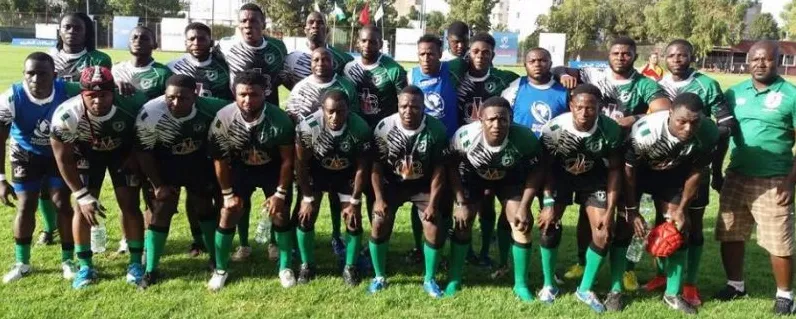
Career facts · Checked 1 October 2026
Nigerian rugby careers in numbers
-
75th
World ranking
Black Stallions, World Rugby men's rankings, June 2026.
-
1998
NRFF founded
6 May 1998; affiliated to World Rugby and Rugby Africa.
-
80
Course places
Registered for World Rugby coaching, refereeing and first-aid courses, Abuja, September 2026.
-
10th
Women's rugby league
The Green Falcons' world ranking at the end of 2025.
The pathway at a glance
Six stages from first touch to national team
Ages are a guide, not a rule. Maro Itoje only started rugby at eleven, after playing basketball, football and athletics.
Age 8 to 12
First rugby at school
Run, pass and catch in safe, coached sessions. The NRFF's Rugby Rising Play Nigeria programme brings rugby into schools, with a special focus on girls.
Age 12 to 16
Join a club or school team
Learn to tackle and to fall safely, step by step, from a trained coach. Clubs in Lagos, Kaduna, Kano and Delta welcome new players.
Age 15 to 19
Sevens tournaments
Sevens is the format of most Nigerian club tournaments, such as the Lagos Independence 7s. It is also an Olympic sport.
Age 17 to 23
University rugby
Rugby was approved for the 27th Nigeria University Games (NUGA) at the University of Jos in November 2025.
Age 18 and up
National teams
The Black Stallions (fifteens), the sevens squad, the women's sevens team and the rugby league teams all pick players.
Age 18 and up
Clubs abroad, for the few
A small number of Nigerians play abroad. Aba-born ThankGod Okafor came through the Sharks academy in South Africa and joined RC Montemor in Portugal.
Step by step
Eight steps to a rugby career
Follow these in order. Each step builds on the one before it.
Try rugby at school or at a club
You do not need to be big to start. Rugby has a place for every body type: fast wings, strong props, clever half-backs. Ask your games teacher whether your school takes part in Rugby Rising Play Nigeria, which the NRFF launched in November 2025 in Kano, Kogi, Delta, Ogun and Edo states, with more states expected to join. Its coaches were trained to World Rugby standards to run safe, engaging and inclusive sessions in schools.
If your school has no rugby, find a club. Nigerian clubs include Cowrie RFC and Racing RFC in Lagos, the Nigeria Police sevens team, Kaduna RFC, Barewa in Kano and Delta Dragon in Delta State. See our clubs and leagues page.
Learn to tackle safely before you play full contact
Tackling is the skill that keeps you safe. A good coach teaches it slowly: body position, falling, then contact at walking pace. Before you play full matches, ask your coach whether they have done World Rugby's free online courses Rugby Ready and Tackle Ready. Players and parents can take them too, on World Rugby Passport.
- Train two or three times a week: running, passing with both hands, catching under pressure.
- Build strength gradually, with bodyweight exercises before weights.
- Always wear a gum shield in contact training and matches.
Play sevens and get seen
Sevens is where Nigerian rugby has had its best days, and it is where young players get noticed. Club tournaments such as the Lagos Independence Rugby 7s bring Nigerian clubs together each year. Sevens is an Olympic sport, and rugby sevens is on the programme of the Dakar 2026 Youth Olympic Games in Senegal (31 October to 13 November 2026), the first Olympic event ever held in Africa. Ask your coach to film your best games and keep a simple record of your matches.
Keep your education going
The most successful rugby player of Nigerian heritage, Maro Itoje, says education was drilled into him by his Nigerian parents. He first played rugby at eleven at St George's School in Harpenden, won a sports scholarship to Harrow School, studied politics at SOAS in London while starting his professional career, and earned an MBA in 2023. He now captains England.
In Nigeria, education and rugby now go together: rugby was approved as one of 22 sports at the 27th NUGA Games, hosted by the University of Jos from 6 to 16 November 2025. A university place keeps you playing at a good level and gives you a career if injury or selection goes against you.
Get known to the federation
The Nigeria Rugby Football Federation (NRFF), founded on 6 May 1998, runs rugby union and sevens and picks the national squads. Its president is Dr. Ademola Are, re-elected in October 2025, with Grace Iyorhe as vice president. Make sure your club is affiliated, play in the competitions the federation recognises, and follow its announcements of camps and trials. Our Contact the NRFF page has the details.
Earn a national team call-up
Nigeria has several national teams, which means more chances to be picked:
- The Black Stallions, the men's fifteens team, ranked 75th in the world in June 2026, coached by Steve Lewis and captained by Babajide Tunde.
- The men's sevens team, which climbed from 11th in Africa in 2024 to 7th at the 2025 Africa Men's Sevens in Mauritius.
- The women's sevens team, which played rugby's first African Games in Accra in March 2024.
- The men's and women's rugby league teams, a separate 13-a-side code.
Read more on our Black Stallions page.
Go abroad only with a real, written offer
Most Nigerian-heritage stars in England, such as Maro Itoje, Ugo Monye and Beno Obano, grew up in Britain and came through its schools and academies. For a player in Nigeria, a move abroad is rare and should come only with a written offer from a real club, which you can confirm by contacting the club directly. Never pay anyone for a “trial”, and ask the NRFF or your club coach before you sign anything.
Gain a qualification alongside your playing
Playing careers are short and, in Nigeria, mostly unpaid. Start your second career while you still play: take a coaching, refereeing or first-aid course (see careers around the game below). A player who can also coach a school team or referee a tournament is more valuable to the sport, and more likely to earn from it.
Advertisement
Pay
Making a living from rugby: the honest picture
Many young people ask how much rugby players earn in Nigeria. Here is the honest answer, using only what we could verify.
| Level | What we could verify | What it means for you |
|---|---|---|
| Nigerian club rugby | No published salaries or match fees | Treat club rugby as an amateur sport. Most players study or work alongside it. |
| National teams | No published match fees or allowances | Representing Nigeria brings travel, experience and recognition, not a reliable income. |
| Professional rugby abroad | A few Nigerians play abroad, such as ThankGod Okafor at RC Montemor in Portugal from December 2017 | Possible for the very best, but rare. Get any offer in writing. |
| Coaching, refereeing and rugby medicine | World Rugby Level 1 and Level 2 courses were run in Abuja in September 2026 | This is where most paid rugby work in Nigeria is growing. |
How players actually support themselves: by combining rugby with school, university or a job; through employers that run their own teams, such as the Nigeria Police sevens team; and by earning from coaching and refereeing. If anyone promises you a big rugby salary, ask to see it in a written contract from the club itself.
Beyond playing
Careers around the game
Nigerian rugby needs far more coaches, referees and medical volunteers than it has. These roles can begin while you are still a student, and the qualifications are recognised worldwide.
| Career | How to start in Nigeria | Next level |
|---|---|---|
| Coach | Take World Rugby's free online Introduction to Coaching and Coaching Children modules, then ask the NRFF about the next face-to-face course. | World Rugby Level 1 and Level 2 coaching, both run in Abuja in September 2026. |
| Referee | Start with the free online Introduction to Match Officiating and the Law exam, then referee school and club games. | World Rugby Level 1 and Level 2 match officiating; national and Rugby Africa panels. |
| First aider or medic | Take the First Aid in Rugby course and the free Concussion Management module. | Immediate Care in Rugby; medical roles with clubs and national teams. |
| Educator | Gain Level 2 qualifications and experience. | World Rugby educator, training coaches and referees. Nigeria now has its own. |
| Development officer | Volunteer with your club, school or state rugby programme. | Federation roles. Wuraola Hussain is the NRFF's Development Officer and a World Rugby-certified educator. |
In September 2026 about 80 people registered for a three-day World Rugby programme in Abuja covering Level 1 and Level 2 coaching, Level 1 and Level 2 match officiating, First Aid in Rugby, Immediate Care in Rugby, safeguarding and educator assessments. NRFF president Ademola Are told them that without qualified, certified referees, coaches and medical people, a team cannot be invited to outside programmes. In other words, these careers are not a consolation prize: the national teams depend on them.
Schools are part of the plan too. In November 2025 the NRFF and the Ekiti State Sports Commission ran a development clinic for games teachers and school game prefects, covering rugby skills, safety, game management and coaching. A games teacher who learns rugby can start a school team.
Women's rugby
The path for girls and women
Rugby is one of the best opportunities in Nigerian sport for girls, because the women's game is young and national teams are still being built.
- Rugby Rising Play Nigeria, launched in November 2025, places a particular emphasis on girls and on building character and leadership through rugby.
- Nigeria's women's sevens team took part in rugby's first-ever African Games tournament in Accra in March 2024, finishing fifth of five teams. It is a start, and it means places are open.
- The women's rugby league team, the Green Falcons, beat Ghana 40-4 in Lagos on their debut on 3 November 2023, beat Ireland 10-0 in October 2025 for their first win outside Africa, and were ranked 10th in the world at the end of 2025.
- Women lead in the sport: Grace Iyorhe is vice president of the NRFF, and Wuraola Hussain is its Development Officer and a World Rugby-certified educator.
Parents sometimes worry that rugby is too rough for girls. The answer is good coaching: safe tackling taught step by step, matched opponents, and the concussion rules below. Bring your parents to watch a training session and meet the coach.
Stay safe
Safety, safeguarding and anti-doping
Rugby is a contact sport, so the rules that protect players matter more than in most sports. Every player, parent and coach should know these.
Concussion: if in doubt, sit them out
World Rugby's Recognise and Remove rules say that a player with a concussion, or even a suspected concussion, must be removed from play immediately. The player must rest until free of symptoms, then return step by step, and may play again only with written clearance from a qualified healthcare professional. World Rugby is more cautious still with children and teenagers. Its message is simple: “If in doubt sit them out.” The free Concussion Management for the General Public course on World Rugby Passport takes little time and could save a life.
Safeguarding
Young players have the right to be safe from abuse and bullying. Safeguarding was part of the World Rugby programme in Abuja in September 2026, and World Rugby offers a free Safeguarding Essentials course. Parents should know who coaches their child, where training takes place and who travels with the team.
Anti-doping
President Tinubu signed the National Anti-Doping Act into law in April 2025. It sets up an independent anti-doping body to apply the World Anti-Doping Code and requires testing in and out of competition; in February 2026 the President approved the board of the new agency. Rugby players are tested too, and a positive test can end a career.
Five safety rules for young rugby players
- Never play on after a blow to the head. Tell your coach, and do not return without written medical clearance.
- Do not play full-contact rugby until a trained coach has taught you to tackle and fall safely.
- Never take a supplement, injection or “power drink” without checking it with a doctor: you are responsible for everything in your body.
- Never pay anyone for a trial or a place abroad. A real club offer comes in writing from the club.
- Parents: make sure your child's coach has done the safeguarding and first-aid courses.
World Rugby's free Keep Rugby Clean course explains anti-doping in plain language for players.
Advice from the stars
What Nigerian rugby leaders want you to know
Every quote below was checked word for word against the outlet named under it. We add one practical lesson to each.
I guess education has always been something that's been drilled into me from my family, from my parents
Maro ItojeEngland and British & Irish Lions captain, born to Nigerian parents
ITV News, 25 March 2026The lesson: Your books and your boots can travel together.
Go back and impact your communities because rugby needs you.
Dr. Ademola ArePresident, Nigeria Rugby Football Federation, to new coaches, referees and medics
The Eagle Online, 15 September 2026The lesson: A qualification is worth most when you use it to teach others.
Now Nigeria has World Rugby educators who can train coaches and referees locally.
Robert BwariWorld Rugby Game Growth Manager, East and Southern Africa
The Eagle Online, 15 September 2026The lesson: You no longer need to travel abroad to get qualified in rugby.
This clinic is part of our national effort to make rugby accessible, safe and development-driven
Wuraola HussainNRFF Development Officer and World Rugby-certified educator
Sports247, 20 November 2025The lesson: Teachers and school prefects can bring rugby to their own schools.
Your first move
Where to start this week
Whatever your age, you can start this week. Tick these off:
- Ask your games teacher whether your school runs rugby or Rugby Rising Play Nigeria.
- Find a club near you on our clubs and leagues page and ask to join a training session.
- Take World Rugby's free Rugby Ready and Concussion Management courses with a parent.
- Buy a gum shield before your first contact session.
- Keep up your school grades: university rugby and scholarships need them.
- If you are older, sign up for a coaching or refereeing course: rugby needs you.
- Parents, teachers and coaches: contact the NRFF about programmes and courses.
Find the federation's details on our Contact the NRFF page, and meet the players who made it on our Nigerian rugby players page.
Keep exploring
Explore Nigerian rugby
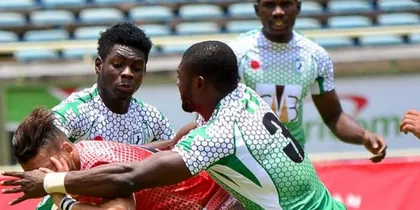
The Black Stallions
Nigeria's fifteens, sevens, women and rugby league teams.Read more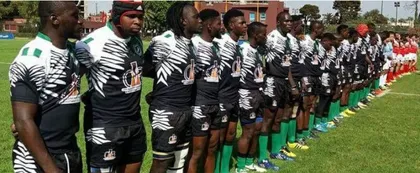
Clubs and leagues
Cowrie, Racing, Barewa, Police and the Lagos 7s.Read more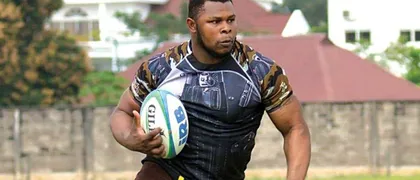
Nigerian rugby players
Itoje, Ubogu, Monye and the home-based stars.Read more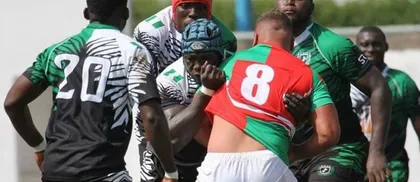
Contact the NRFF
How to reach the Nigeria Rugby Football Federation.Read more
Quick answers
Rugby careers in Nigeria: your questions
Can you make a living from rugby in Nigeria?
Very few people do as players. We could find no published salaries or match fees for Nigerian club or national team rugby, and most players study or work alongside the game. Paid opportunities are growing in coaching, refereeing and rugby medicine, and a small number of Nigerians, such as ThankGod Okafor in Portugal, have played professionally abroad.
How do I start playing rugby in Nigeria?
Ask your school whether it runs rugby or the NRFF's Rugby Rising Play Nigeria programme, which started in Kano, Kogi, Delta, Ogun and Edo states in November 2025. Otherwise join a club such as Cowrie RFC or Racing RFC in Lagos, Kaduna RFC, Barewa in Kano or Delta Dragon in Delta State.
How do I become a rugby coach or referee in Nigeria?
Start with World Rugby's free online courses on World Rugby Passport, such as Introduction to Coaching, Coaching Children and Introduction to Match Officiating. Then ask the Nigeria Rugby Football Federation about face-to-face World Rugby Level 1 and Level 2 courses, which were held in Abuja in September 2026.
Is rugby safe for children?
Rugby is a contact sport, so coaching matters. Children should learn to tackle and fall safely from a trained coach before playing full contact. World Rugby's rule is that any player with a suspected concussion must be removed from play immediately and may only return with written clearance from a qualified healthcare professional: if in doubt, sit them out.
Can girls play rugby in Nigeria?
Yes. Rugby Rising Play Nigeria has a special focus on girls, Nigeria's women's sevens team played at the 2023 African Games in Accra, and the women's rugby league team, the Green Falcons, was ranked 10th in the world at the end of 2025.
Is rugby played at Nigerian universities?
Yes. Rugby was approved as one of 22 sports for the 27th Nigeria University Games (NUGA), hosted by the University of Jos from 6 to 16 November 2025.
Which rugby stars have Nigerian roots, and how did they make it?
England and Lions captain Maro Itoje, born in London to Nigerian parents, started rugby at eleven, won a sports scholarship to Harrow School and studied at university while turning professional. Lagos-born Victor Ubogu, who moved to England in 1977, won 24 England caps, and Benin City-born Steve Ojomoh played at the 1995 World Cup.