Scuba Diving · Careers
How to build a diving career in Nigeria
From your first swim to PADI instructor, offshore commercial diver or Nigeria's first Olympic diver: every step, the costs and the safety rules.
Advertisement
Careers in diving
Your road into diving
A few nautical miles off the Lagos coast, shipwrecks lie on the seabed, covered in coral and sponges and circled by batfish, snapper and moray eels. Only a small number of Nigerians have ever seen them. Fewer still know that diving can be a career: as a dive guide, a scuba instructor, a commercial diver in the oil and gas industry, a dive medic, or an athlete in the Olympic sport of springboard and platform diving.
This page is written for young Nigerians who love the water, and for the parents and teachers who guide them. It explains every step, from learning to swim to the professional qualifications, what each path costs and pays where figures exist, and the safety rules that matter more in diving than in almost any other sport. Every fact was checked on 1 October 2026.
The honest truth first: recreational scuba in Nigeria is small, centred on Lagos and on a short dry-season window. Few people earn a full-time living from it here. The biggest diving employer in Nigeria is the offshore industry, where commercial divers need different, tougher training. We explain both.

Career facts · Checked 1 October 2026
Diving careers in numbers
-
30 m
Advanced Open Water depth
Asked for before diving the Lagos wrecks.
-
18
Minimum age for Divemaster
PADI's first professional level.
-
100
Dives to become an instructor
PADI Open Water Scuba Instructor.
-
20
Dive medics trained in Nigeria
NCDMB, SNEPCO and PTI, 2024.
The pathway at a glance
Six stages from swimmer to professional diver
Ages are a guide, not a rule. Many divers learn as adults and still build a career.
Childhood
Learn to swim, really well
Every diving career starts in the pool. Strong swimming and comfort in open water come first.
Age 10 to 15
Junior Open Water Diver
PADI certifies junior divers from 10, with depth limits: 12 metres at 10 to 11 and 18 metres at 12 to 14. ScubaLagos has taught students from 14.
Teens
Advanced Open Water and logged dives
Advanced Open Water trains you to 30 metres, the level ScubaLagos asks for before the offshore Lagos wrecks.
Age 18 and up
Divemaster
The first professional level: Rescue Diver, first aid training and at least 40 logged dives to start, 60 to certify.
Adult
Instructor
Six months as a certified diver, Divemaster, at least 60 dives to start the Instructor Development Course and 100 to be certified.
Graduate
Commercial diver or dive medic
Offshore diving needs commercial training to industry standards. The NCDMB has sponsored Nigerians through programmes at the Petroleum Training Institute.
Step by step
Seven steps to a diving career
Follow these in order. Steps 5 and 6 lead to recreational diving careers; step 7 is the commercial route.
Become a strong, confident swimmer
You cannot dive safely if you cannot swim. When BusinessDay visited ScubaLagos in 2017, students had to be able to swim 200 metres or tread water for 15 minutes before training. Join a swimming club or school team and get comfortable in open water as well as the pool. Our swimming section explains where Nigerians train.
Learn to dive with a recognised agency
Scuba certificates come from international training agencies such as PADI. In Nigeria, ScubaLagos, the country's first PADI dive operator, trains divers from its base at the Lagos Jet Ski Riders Club in Ikoyi. Classes are held in the evenings and at weekends, usually over two to four weeks, with up to eight students per divemaster. Its students have ranged from 14 to 65 years old, and students over 45 need a doctor's clearance.
The first certificate is Open Water Diver, which allows diving to 18 metres. PADI certifications do not expire, but a refresher is wise if you have not dived for a while. Contact details are on our contact page.
Earn your Advanced Open Water for Lagos
Lagos is not an easy place to learn: currents are common and visibility is often 5 to 15 metres. That is why ScubaLagos asks students to complete PADI Advanced Open Water, which trains divers to 30 metres, before joining boat dives to the offshore wrecks. The season runs from November to April, when the sea is calmer. Read our Scuba diving in Lagos guide before you book.
Log your dives and train for rescue
Every professional qualification asks for a logbook. Record every dive: date, site, depth, time and what you learned. Next, take the Rescue Diver course and a first aid and CPR course such as Emergency First Response. These teach you to look after other divers, the most important skill a professional has.
Go professional as a Divemaster
The PADI Divemaster is the first professional rating. To start, PADI requires you to be at least 18, to hold Open Water, Advanced Open Water and Rescue Diver certifications, to have CPR and first aid training within the past 24 months, a physician's medical clearance within 12 months, and at least 40 logged dives. You need 60 logged dives to be certified. Divemasters guide certified divers and assist instructors.
Become a scuba instructor
Instructors teach and certify new divers. To begin a PADI Instructor Development Course (IDC) you must be at least 18, a certified diver for at least six months, a Divemaster, hold current Emergency First Response training, have in-date medical approval and at least 60 logged dives; you need 100 dives to receive the instructor credential. The IDC can take as little as 10 to 14 days, followed by an Instructor Examination run by independent PADI examiners.
Or take the commercial road offshore
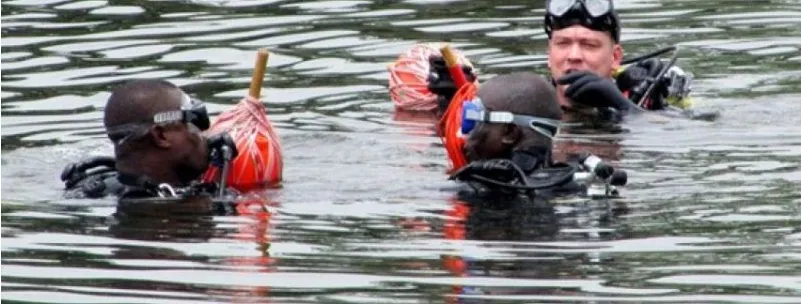
Commercial divers inspect, repair and weld pipelines and structures underwater, mostly for the oil and gas industry. It is a different profession from recreational scuba, with its own training standards. In June 2026 the Nigerian Content Development and Monitoring Board (NCDMB) sponsored 15 graduates with engineering and geology backgrounds on a 12-month underwater welding and commercial diving programme: foundation training at the Petroleum Training Institute (PTI), Effurun, shallow-water diving at Abraka, sea training at Burutu and final training in South Africa. In 2024, 20 divers trained by NCDMB, SNEPCO and PTI became the first dive medic technicians trained in Nigeria. Watch the NCDMB and PTI for the next intake.
Advertisement
Pay
Making a living from diving
Diving pay in Nigeria is not widely published, so be wary of anyone quoting big numbers. These are the figures and facts we could verify.
| What | What we could verify | Source |
|---|---|---|
| Cost of learning in Lagos | About ₦505,000 for Open Water and Advanced Open Water together at ScubaLagos in 2017; prices will have changed, so ask for current fees | BusinessDay, February 2017 |
| Commercial diving training | Sponsored places: 15 NCDMB-sponsored trainees on a 12-month programme in 2026 | NCDMB, June 2026 |
| Dive medic technicians | 20 locally trained divers completed the programme in 2024 and secured employment | Sweetcrude Reports, July 2024 |
| Salaries for divers in Nigeria | No reliable figure is published | SitesNG |
How people actually earn: with a sea season of only November to April, recreational guiding and teaching in Lagos is unlikely to be a full-time income on its own, so dive professionals may combine it with other work or use their internationally recognised PADI qualifications abroad. Commercial divers, dive medics and underwater welders are employed by offshore contractors; the NCDMB-backed programmes show the industry wants Nigerians in these roles. In August 2026 the International Marine Contractors Association (IMCA) met operators in Lagos to discuss building local certification capacity, because many Nigerians still have to train abroad.
Careers
Careers in diving
Diving opens more doors than most people realise. These are the main careers, and how to start each one in Nigeria.
| Career | How to start in Nigeria | Next level |
|---|---|---|
| Dive guide (Divemaster) | Learn with a PADI operator such as ScubaLagos, log 60 dives, complete Rescue Diver and first aid. | Guide abroad or lead dive trips. |
| Scuba instructor | Divemaster, six months certified, 100 dives, then the Instructor Development Course and exam. | Course director, dive centre manager or owner. |
| Commercial diver | Engineering or technical background helps; watch for NCDMB-sponsored programmes at PTI, Effurun. | Offshore diving supervisor, inspection specialist. |
| Dive medic technician (DMT) | Commercial divers can train as DMTs, the first responders in an offshore emergency. | Offshore medical and hyperbaric roles. |
| Underwater welder | NCDMB has sponsored graduates on underwater welding programmes for pipeline work. | Specialist subsea construction. |
| Boat crew and dive support | Work with dive boats, tanks and compressors, as the Lagos Jet Ski Riders Club does for ScubaLagos. | Skipper, dive operations manager. |
Competitive diving
The Olympic sport of diving
There is a second kind of diving: the Olympic sport of springboard and platform diving, where athletes perform somersaults and twists from 1 m and 3 m springboards and a 10 m platform. It is governed by World Aquatics internationally and by the Nigeria Aquatics Federation at home, led since 6 June 2026 by Lekan Fatodu.
Be honest about where Nigeria stands: we have found no record of a Nigerian diver at the Olympic Games, the Commonwealth Games or the African Games. That means the first Nigerian Olympic diver is still to come. Some elite divers started in gymnastics or dance, then move to the pool. If this is your dream, become a strong swimmer and gymnast, find a pool with proper boards, and ask the Nigeria Aquatics Federation about coaching. Learn how dives are scored on our competitive diving page.
Stay safe
Safety, medicals and fake certificates
Diving is safe when you respect its limits, and unforgiving when you do not. These rules protect you.
Rules that keep divers alive
- Never dive beyond your training. PADI limits: 12 metres for juniors aged 10 to 11, 18 metres for Open Water Divers, 30 metres for Advanced Open Water and 40 metres as the recreational maximum. Local rules can be stricter.
- Get medical clearance. Divemaster candidates need a physician's clearance within 12 months; ScubaLagos asks students over 45 for a doctor's clearance.
- Dive with a recognised operator, a buddy and a proper boat. Lagos currents and low visibility are not for unsupervised beginners.
- Check certificates are real. A genuine certificate comes from a recognised agency after training and can be verified with that agency. Never pay for a certificate without the training.
- Anti-doping applies to competitive divers. Nigeria's National Anti-Doping Act, signed in 2025, created an independent National Anti-Doping Organisation under the World Anti-Doping Code. Check every medicine before you take it.
Parents: a good first step is a supervised try-dive in a pool with a certified instructor, not a sea dive with friends.
Advice from the stars
What people in Nigerian diving want you to know
Every quote below was checked word for word against the outlet named under it. We add one practical lesson to each.
Once you become a diver, your whole life, your vacations are planned around diving.
Houssam AzemFounder, ScubaLagos, Nigeria's first PADI dive operator
BusinessDay, 24 February 2017The lesson: If diving grabs you like this, it can become more than a hobby. Plan for it.
Underwater welding and commercial diving are critical to the survival, profitability, and safety of the oil and gas sector
Alexis EmelleRepresenting the NCDMB Executive Secretary
NCDMB, 8 June 2026The lesson: Nigeria's offshore industry needs trained divers: technical subjects at school open this door.
Your first move
Where to start this week
Whatever your age, you can start this week. Tick these off:
- Book swimming lessons or join a swimming club if you are not yet a strong swimmer.
- Contact ScubaLagos to ask about the next beginner course and current fees.
- Plan your sea dives for the November to April season.
- Start a dive logbook from your very first dive.
- Take a first aid and CPR course.
- If you study engineering, follow the NCDMB and PTI for commercial diving programmes.
- Dreaming of the Olympics? Ask the Nigeria Aquatics Federation about springboard coaching.
Find ScubaLagos and the Nigeria Aquatics Federation on our diving contact page.
Keep exploring
Explore diving in Nigeria
Scuba diving in Nigeria
Scuba and competitive diving in Nigeria.Read more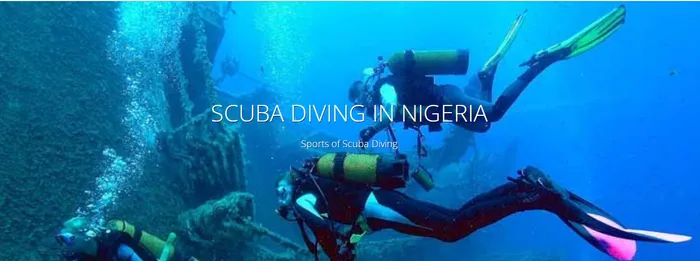
Scuba diving in Lagos
Wrecks, season, visibility and how to get certified.Read more
Competitive diving
Springboard, platform and how dives are scored.Read more
Contact ScubaLagos
Nigeria's PADI dive operator and the aquatics federation.Read more
Quick answers
Diving careers in Nigeria: your questions
How do I become a scuba instructor in Nigeria?
Learn with a PADI operator such as ScubaLagos, progress through Open Water, Advanced Open Water, Rescue Diver and Divemaster, then take the PADI Instructor Development Course. You must be at least 18, certified for six months, hold Emergency First Response training and have 100 logged dives to be certified as an instructor.
Where can I learn scuba diving in Nigeria?
ScubaLagos, Nigeria's first PADI dive operator, trains divers at the Lagos Jet Ski Riders Club in Ikoyi, with evening and weekend classes over about two to four weeks. Sea dives run from November to April.
How old do you have to be to learn scuba diving?
PADI certifies Junior Open Water Divers from age 10, with depth limits of 12 metres at 10 to 11 and 18 metres at 12 to 14. ScubaLagos has trained students from 14 to 65.
What is a commercial diver and how do I become one in Nigeria?
Commercial divers work underwater on pipelines and offshore structures. In Nigeria the NCDMB has sponsored graduates on 12-month commercial diving and underwater welding programmes through the Petroleum Training Institute, Effurun, with sea training and final training in South Africa.
Can you earn a living from diving in Nigeria?
A few people do. Recreational diving in Lagos is small and seasonal, with sea dives from November to April, so it rarely pays a full-time income on its own. The offshore industry employs commercial divers and dive medic technicians; 20 locally trained divers who completed a 2024 programme secured employment.
Has Nigeria ever had an Olympic diver?
We have found no record of a Nigerian diver at the Olympic, Commonwealth or African Games. The sport is governed in Nigeria by the Nigeria Aquatics Federation, led since June 2026 by Lekan Fatodu.
Do I need to be a good swimmer to scuba dive?
Yes. When BusinessDay visited ScubaLagos in 2017, students had to swim 200 metres or tread water for 15 minutes before training.