Squash · Careers
How to build a squash career in Nigeria
From your first lesson to junior trials, the PSA World Tour and the road to LA 2028: every step, what squash pays and the rules that keep you safe.
Advertisement
Careers in squash
Your road to a life in squash
Behind the glass walls of courts in Surulere, Ikoyi, Ikeja and Abuja, a small group of Nigerians has done something remarkable. With little money and often no coach, they have climbed the world rankings, won professional titles and put Nigeria on the squash map. In 2023 Onaopemipo Adegoke became the first Nigerian to win a PSA World Tour title. In July 2026 Nigeria's junior girls won the country's first ever match at the World Junior Team Championships. And squash joins the Olympic Games at Los Angeles 2028.
This page is for young players, parents, PE teachers and club coaches. It explains how to start, how juniors are picked for Nigeria, how the professional tour works, what squash really pays, the coaching and refereeing courses you can take, and the safety rules every young player must know. Every figure was checked on 1 October 2026.
One honest truth first: squash in Nigeria is a sport of courage and self-reliance. Nigeria's top players still find their own sponsors, and some coach themselves. But the sport has more than 300 courts across Nigeria, a busy home tournament calendar, and a new Olympic dream. With good planning, it can give you a career, an education and a way of life.
Career facts · Checked 1 October 2026
Nigerian squash careers in numbers
-
130
Best Nigerian men's ranking
Onaopemipo Adegoke, January 2025.
-
104
Best Nigerian women's ranking
Yemisi Olatunji, the best by a Nigerian woman.
-
300+
Squash courts in Nigeria
Many with glass back walls.
-
16
Olympic places per gender
Squash makes its debut at LA 2028.
The pathway at a glance
Six stages from first lesson to the world tour
Ages are a guide, not a rule. Squash rewards players who start early, but late starters with fitness and drive can still rise.
Age 7 to 12
Club and school squash
Start at a club or stadium court with a coach. Yemisi Olatunji began at a local court in Akure at about ten, in 2004.
Age 10 to 15
Junior tournaments
Play club, state and national junior events. Good results bring you to the notice of the Nigeria Squash Federation.
Age 13 to 18
Junior national team
Trials pick Nigeria's junior squads. In 2026, 17 juniors were invited to trials at Ikoyi Club 1938 and eight made the team for Canada.
Age 16 to 20
Senior national champion
Win national events such as the national championships and National Sports Festival. Adegoke was national champion at 19.
Age 18 and up
PSA Challenger and Satellite events
Join the Professional Squash Association (PSA) and earn ranking points, including at PSA-ranked events staged in Lagos.
Age 20 and up
World ranking, Africa and the Olympics
Africa Senior Championships, the 2027 African Games in Cairo and, for a few, the road to LA 2028.
Step by step
Eight steps to a squash career
Follow these in order. Each step builds on the one before it.
Get on a court with a coach, and stay in school
Squash is fast and technical, so a good coach early saves years. Find a club, school or stadium court near you: Nigeria has more than 300, many with glass back walls. At the same time, do not neglect school. Yemisi Olatunji, Nigeria's best-ranked woman ever, remembers that someone at her first big tournament paid for her senior school certificate exam: squash and school went together from the start.
- Ask your state squash association or the nearest club which coaches take juniors.
- Train three or four times a week if you can, and build fitness with running and court sprints.
Commit, and train with purpose
Talent is not enough. Olatunji admits that when she started she was not consistent because her attention was divided; her turning point came in 2006 when she committed fully, and her intense training earned her the nickname “fire down”. Three years later she won bronze at her first major competition, the 2009 Fembas Squash Open in Abeokuta.
Play every junior event you can reach
Matches teach what drills cannot. Enter club, state and national junior tournaments and play older opponents whenever you can. Nigeria's home calendar includes the national championships, the Chamberlain Squash Open series in Lagos, the President Obasanjo Squash Open, the Lagos International Squash Classic, the Abuja Squash Open and the National Sports Festival.
Earn a junior national team place
Nigeria now sends junior teams to world events. For the 2026 World Squash Junior Team Championships in Niagara-on-the-Lake, Canada (26 to 31 July), the federation invited 17 juniors to trials at Ikoyi Club 1938, cut the group to 12 for a camp in Abuja, and picked eight: four boys and four girls. The girls then beat ninth seeds Brazil 2-1, Nigeria's first ever win at the event. Places were won at trials, so your results count.
Become national champion
Senior titles at home build your name and your ranking. Adegoke began playing only after some reluctance, encouraged by his brother, then rose through Nigeria's junior ranks to become national champion at 19. Olatunji won national titles again and again between 2013 and 2021, plus National Sports Festival gold in 2018 and 2021.
Turn professional on the PSA Tour
The Professional Squash Association runs the world rankings. Its 2024-25 season had 1,019 sanctioned events, including 215 Challenger events and 720 Satellite and Federation events, the levels where new professionals start. Several Nigerian tournaments carry PSA ranking points, so you can climb without leaving home. Adegoke turned professional in 2018, won the Namibian Open in 2023 from two games down and reached world No. 130 in January 2025.
Aim for Africa, the African Games and LA 2028
Nigeria's men and women both won team bronze at the 2022 Africa Senior Championships in Bulawayo. The next big target is the African Games in Cairo (20 January to 7 February 2027), one of the continental routes to the Olympics. Squash at LA 2028 has only 16 places per gender, earned through continental Games, PSA world rankings, universality places and a final world qualifier in June 2028. Adegoke's stated goal is to be Nigeria's first Olympic squash player.
Build a life in squash that lasts
Playing careers end; squash careers need not. Olatunji retired from the tour in 2023 and now coaches full-time; she guided her sister Busayo to a world ranking of 141. Take a coaching or refereeing course while you are still playing (see below), and keep studying: Busayo combined the tour with studies at the University of Lagos.
Advertisement
Pay
Making a living from squash
Squash pay is honest work for modest money for most players. These are the figures we could verify.
| Level | What we could verify | Source |
|---|---|---|
| Whole PSA Tour | A record $12,534,421 in prize money in the 2024-25 season, across 1,019 events in 70 countries | PSA, August 2025 |
| The very top | The top 10 players averaged $183,734; the men's and women's world No. 1s each earned about $400,000 | PSA, August 2025 |
| Nigerian professionals | No reliable prize money figures are published; Nigeria's best players find most of their own sponsorship | The Guardian (Nigeria), August 2025 |
| Grassroots | Many Nigerian players have relied on goodwill from a few enthusiasts of the sport | The Guardian (Nigeria), January 2019 |
In practice, Nigerian squash players fund themselves through a mix of personal sponsors, club support, jobs and coaching income. Adegoke has said players try to solicit sponsors themselves. Plan for rackets, strings, shoes, eyewear, travel and entry fees before you plan for prize money, and save from your first payment.
Beyond playing
Careers around the court
Not every squash career is on court. Clubs and federations need coaches, referees and organisers, and these routes are open to former players and newcomers alike.
| Career | How to start | Next level |
|---|---|---|
| Coach | The World Squash Foundation Coaching Award, run online by World Squash and SquashSkills: seven modules and an assessment, about eight hours, £99, no court needed. | Level 1 certificates through national governing bodies, then higher levels. Ask the Nigeria Squash Federation which courses it recognises. |
| Referee | World Squash Officiating's Level 0 Rules course is free online, then Level 1 (Club) and Level 2 (Tournament). | Level 3 (National) prepares officials for national, PSA and World Squash events; Levels 4 and 5 are continental and world. |
| Club professional | Teach juniors and members at a club with courts, as Yemisi Olatunji does after her playing career. | Head coach, academy or national junior coach. |
| Tournament organiser | Volunteer at the Chamberlain Squash Open, a national championship or your club's events. | Event management, federation or sponsor roles. |
Women's squash
The path for girls and women
Nigerian women have proved they belong on the world tour.
- Yemisi Olatunji, born in Igbara-Odo, Ekiti State, reached world No. 104, the best ever by a Nigerian woman, before retiring in 2023 to coach.
- Her younger sister Busayo Olatunji reached world No. 141 in April 2024 while studying at the University of Lagos.
- Nigeria's women won team bronze at the 2003 All-Africa Games in Abuja and again at the 2022 Africa Senior Championships.
- In July 2026 the junior girls, Awawu Balogun, Delight Allison and Mosturah Durosinlorun, won Nigeria's first match at the World Junior Team Championships.
Olatunji believes Olympic squash will change the picture, saying more kids, “especially females”, will learn about the game. Parents: meet the coach, watch sessions, and make sure a guardian or team official travels with any junior going to an event.
Stay safe
Safety, eyewear and clean sport
Squash is safe when played properly, but a few rules protect young players.
Five rules to protect your squash career
- Wear protective eyewear. World Squash requires all players under 19 to wear suitable eyewear in competition, even in senior events, and everyone in doubles.
- Warm up properly, drink water, and stop at once if you feel chest pain or dizziness.
- Check every medicine and supplement before you take it, and tell every doctor you are an athlete.
- Never pay anyone who promises a place on a national team or a sponsorship abroad. Team places come from open trials.
- Never agree to lose a match or a game for money, and report any approach to your federation.
Anti-doping
Nigeria's National Anti-Doping Act, 2025 set up the Nigeria Anti-Doping Centre, whose Technical Board was inaugurated on 3 July 2026 to educate athletes and enforce the World Anti-Doping Code. With squash entering the Olympics, testing will matter more than ever for anyone chasing LA 2028.
Advice from the stars
What Nigerian squash people want you to know
Every quote below was checked word for word against the outlet named under it. We add one practical lesson to each.
In Nigeria, it has shaped a lot of players; took a lot of players out of the streets.
Onaopemipo AdegokeNigeria's No. 1 and first PSA World Tour title winner
The Guardian (Nigeria), 11 August 2025The lesson: Squash can change a life, not just a ranking.
We try as much as possible to solicit for sponsors ourselves.
Onaopemipo AdegokeNigeria's only squash player at the 2025 World Games
The Guardian (Nigeria), 11 August 2025The lesson: Learn early to present yourself to sponsors: it is part of the job.
You know it has been hard getting new sponsors; we players have only been thriving due to goodwill from few enthusiasts of the sport.
Yemisi OlatunjiBest-ranked Nigerian woman in history, now a coach
The Guardian (Nigeria), 18 January 2019The lesson: Build relationships with the people who love the sport; they keep careers alive.
When I started, I was not consistent with training because my attention was divided with other engagements just to get my life going.
Yemisi OlatunjiWorld No. 104 at her peak
BlitzikSports, 11 June 2021The lesson: Real progress begins the day you commit fully.
We are really excited. We are so happy to get our first win as a team.
Jonah IbrahimHead coach, Nigeria's junior girls
Squash Mad, 28 July 2026The lesson: Every Nigerian first starts with a team that believed it could win.
Your first move
Where to start this week
Whatever your age, you can start this week. Tick these off:
- Find a club, school or stadium squash court near you and ask about junior sessions.
- Buy protective eyewear before you buy an expensive racket.
- Ask your state squash association about junior tournaments and trials.
- Keep your school grades up: Nigeria's top players combined squash with education.
- Take the free World Squash Officiating Level 0 rules course online.
- Keep a diary of your results and, when you turn professional, your PSA ranking.
- Parents and coaches: contact the Nigeria Squash Federation for official programmes.
Find the federation's details on our Contact squash in Nigeria page, and see the home calendar on our games and tournaments page.
Keep exploring
Explore Nigerian squash
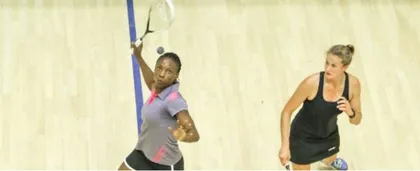
Squash in Nigeria
The federation, the courts and Nigeria's rising professionals.Read more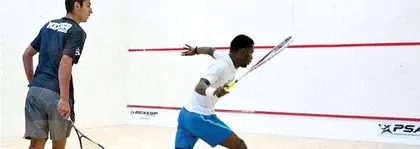
History of squash in Nigeria
From King's College in 1956 to LA 2028.Read more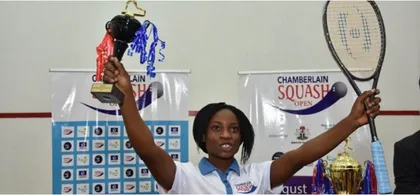
Games and tournaments
African Games, Africa championships and home events.Read more
Nigerian squash players
Adegoke, Olatunji and the professionals.Read more
Quick answers
Squash careers in Nigeria: your questions
How do I start playing squash in Nigeria?
Find a club, school or stadium court with a coach. Nigeria has more than 300 squash courts, including the National Stadium in Surulere, Lagos. Ask your state squash association about junior sessions and tournaments.
How are Nigeria's junior squash teams selected?
Through trials. For the 2026 World Junior Team Championships in Canada, 17 juniors were invited to trials at Ikoyi Club 1938, 12 went to a camp in Abuja, and eight players were picked.
Can a Nigerian squash player turn professional?
Yes. Players join the Professional Squash Association and earn ranking points at PSA events, including some staged in Nigeria. Onaopemipo Adegoke won the first PSA World Tour title by a Nigerian in 2023 and reached world No. 130 in 2025.
How much do squash players earn?
The PSA Tour paid a record $12.5 million in 2024-25, and the top 10 averaged $183,734. Nigerian professionals earn far less and mostly rely on sponsors they find themselves, club support and coaching.
Is squash in the Olympics?
Yes, from Los Angeles 2028, with 16 places per gender. Places come through continental Games such as the 2027 African Games in Cairo, PSA world rankings, universality places and a final world qualifier in June 2028.
How do I become a squash coach or referee?
Coaches can start with the online World Squash Foundation Coaching Award (about eight hours, £99). Referees can take World Squash Officiating's free Level 0 rules course, then Levels 1 to 5. Ask the Nigeria Squash Federation which courses it recognises.
Do young squash players have to wear goggles?
Yes. World Squash requires all players under 19 to wear suitable protective eyewear in competition, even in senior events, and all players in doubles.