Taekwondo · Careers
How to build a taekwondo career in Nigeria
From your first class to the Olympic mat: belts, trials, selection, the honest facts about money and the careers you can build in taekwondo.
Advertisement
Careers in taekwondo
Your road through taekwondo
Elizabeth Anyanacho was a secondary school sprinter training at the National Stadium in Abuja when an Olympic medallist, Chika Chukwumerije, noticed her posture and athleticism and asked her to try taekwondo. She knew almost nothing about the sport. She went on to fight at two Olympic Games, win African Games gold and, in 2025, take world championship bronze, Nigeria's first world medal in the sport in 20 years.
Her story shows that taekwondo careers in Nigeria are built by talent spotted early, good coaching and patient work. This page is for young athletes, parents, teachers and club instructors. It explains each stage from your first class to the national team, how belts and the national open trials work, the honest truth about money, the careers you can build as a coach or referee, and the rules that keep young fighters safe. Everything was checked on 1 October 2026.
One honest truth first: taekwondo in Nigeria is an amateur, Olympic sport. Athletes do not earn salaries from fighting, and even Nigeria's only Olympic taekwondo medallist has spoken about the lack of funding. What taekwondo offers is a real Olympic pathway, a respected black belt and skills you can teach for life.
Career facts · Checked 1 October 2026
Taekwondo careers in numbers
-
2008
Olympic bronze
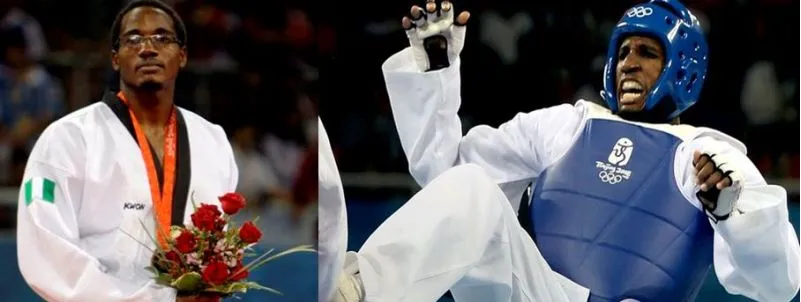
Chika Chukwumerije, Beijing, men's +80kg.
-
300+
Athletes at 2026 trials
NTF national open trials, Abeokuta, May 2026.
-
7
Medals in Bamako
Nigeria at the 2026 African Championships: 3 gold, 1 silver, 3 bronze.
-
15
Age for a dan black belt
Kukkiwon poom ranks cover children under 15.
The pathway at a glance
Six stages from first class to the Olympics
Ages are a guide. Anyanacho came to taekwondo from sprinting in her senior secondary school years.
Age 5 to 12
Club classes and coloured belts
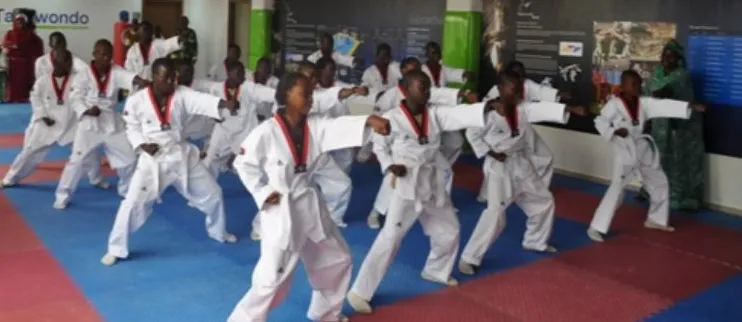
Learn kicks, blocks, poomsae (forms) and etiquette at a club linked to the Nigeria Taekwondo Federation.
Age 10 to 15
Junior black belt (poom)
Kukkiwon awards poom ranks to children under 15; the adult dan black belt starts at 15.
Age 12 to 17
School, state and national events
State championships, school sports and the National Sports Festival are where coaches first see you.
Age 15 and up
National open trials
The NTF's 2026 open trials in Abeokuta drew over 300 athletes, from fighters to para and poomsae athletes.
Age 17 and up
African Championships and African Games
Nigeria won 7 medals at the 2026 African Championships in Bamako. The next African Games are in Cairo in 2027.
Age 18 and up
World Championships and the Olympics
Anyanacho fought at Tokyo 2020 and Paris 2024 and won world bronze in 2025.
Step by step
Eight steps to a taekwondo career
Follow these in order. Each step builds on the one before it.
Start at a club inside the national system
Look for a club or school programme whose instructors grade students through recognised bodies and enter events run by the Nigeria Taekwondo Federation (NTF) or your state taekwondo association. Watch a class before you join: a good instructor teaches control and respect before power.
- Ask whether the club's black belts are certified by Kukkiwon, the world taekwondo headquarters in Seoul.
- Ask which state association the club belongs to and whether its students compete in NTF events.
Earn your belts properly
Children under 15 earn poom (junior black belt) ranks from Kukkiwon; the adult dan black belt starts at 15. To apply for a 1st dan, a student must be at least 15 and have trained at least six months from the 1st kup. The NTF also holds Kukkiwon dan gradings: it completed one alongside its 2026 open trials. A certificate you can verify is worth far more than a belt bought quickly.
Pick your event: kyorugi, poomsae or para
Taekwondo has more than one road to a medal. Kyorugi is the fighting event, contested in weight classes. Poomsae is the forms event, judged on precision and power. Para taekwondo has its own events for athletes with impairments. At the 2026 African Championships in Bamako, Nigeria won gold in all three: Faridah Aderibigbe in kyorugi, Haruna Usman in poomsae and Ability Mathew Udom in para taekwondo.
Compete at state and national level
School sports, state championships and the National Sports Festival build your record and bring you to the notice of national coaches. Chika Chukwumerije, now chairman of the Abia Taekwondo Association, says the focus should be on identifying talents from school. Keep a record of every result and grading.
Attend the national open trials
In May 2026 the NTF held three days of national open trials at the Alake Sports Centre in Abeokuta, Ogun State, with more than 300 athletes. NTF president Grand Master Tayo Popoola said the trials were designed to find talents who could become world-class within two to three years, with athletes picked for the African Championships and future events including the African Games and the 2028 Olympics. Ask your coach or state association when the next trials are announced.
Represent Nigeria in Africa and the world
Nigeria has won taekwondo medals at almost every African Games since 1987. At Accra 2023 (held in March 2024) the team won one gold, three silver and four bronze, with Anyanacho winning the women's -67kg. In Bamako in 2026, a team of eleven athletes and two coaches won three gold, one silver and three bronze. The next African Games are in Cairo, Egypt, from 20 January to 7 February 2027. For young fighters, the Youth Olympic Games in Dakar, Senegal (31 October to 13 November 2026) include 11 taekwondo events.
Aim for the Olympics, and keep studying
Nigeria has sent taekwondo fighters to the Olympics since Athens 2004, and Chukwumerije won bronze in Beijing in 2008. Olympic places are won through world rankings and continental qualification tournaments: Anyanacho qualified for Paris 2024 at the African qualifier in Dakar. Chukwumerije earned a mechanical engineering degree from FUTO and a master's from the University of Liverpool while competing, proof that school and sport can go together.
Plan a life after competing
Chukwumerije retired after more than two decades in the sport saying he needed to plan for a stable future for his family, finances and career. Learn to coach, referee or run a club while you are still an athlete, and finish your education.
Advertisement
Pay
Funding and making a living
Taekwondo is an Olympic sport, but Nigerian athletes do not earn salaries from it. These are the facts we could verify.
| Level | What we could verify | Source |
|---|---|---|
| Athlete pay | No salaries or prize money for Nigerian taekwondo events are published | SitesNG |
| Funding | Chika Chukwumerije said in 2021 that some federations have funding but taekwondo does not | Blueprint, October 2021 |
| Government support | The NTF thanked the National Sports Commission for funding a large team to the 2026 African Championships | Blueprint, May 2026 |
| Reality | Athletes fund themselves through family, clubs, state sports councils, sponsors and coaching work | SitesNG |
What this means: plan to earn from the sport through teaching. A certified black belt can run classes in schools, estates, gyms and companies, and Nigeria's taekwondo legends, from George Ashiru to Chukwumerije, built lasting careers as instructors, administrators and mentors.
Beyond competing
Careers around the mat
These are the main careers around Nigerian taekwondo and how to begin.
| Career | How to start in Nigeria | Next level |
|---|---|---|
| Club instructor | Earn a Kukkiwon-certified black belt, assist your instructor and teach junior classes. | Open your own club; higher dan grades through Kukkiwon. |
| Coach | Coach at club and state level, then ask your state association and the NTF about coaching courses. | Coach state and national teams. Two coaches went with the team to Bamako in 2026. |
| Referee | Officiate at club and state events and ask the NTF how national referees are trained and graded. | International referee status. George Ashiru became an international Class A referee. |
| Administrator | Volunteer with your state association at championships and trials. | State association or federation roles. Chukwumerije now chairs the Abia association. |
| Physio, sports science or media | Study physiotherapy, sports science or journalism and work with events. | National team support staff or sports media. |
Women's taekwondo
Taekwondo for girls and women
Women lead Nigerian taekwondo today, on the mat and in the boardroom.
- Elizabeth Anyanacho (born 1999) is a two-time Olympian, 2023 African Games champion and 2025 world bronze medallist.
- Chinazum Nwosu won African Games gold in 2019 and Uzoamaka Otuadinma in 2015.
- The NTF itself is led by a woman, president Temitayo Kuburat Popoola.
- Anyanacho says taekwondo taught her confidence off the mat: she learned to speak up and stand out. Parents, that is a benefit worth more than any medal.
Stay safe
Safety, anti-doping and warning signs
Every young athlete and parent should know these rules.
- Anti-doping: Nigeria's National Anti-Doping Act, 2025 created the Nigeria Anti-Doping Centre, whose technical board was inaugurated in July 2026 to educate athletes, including at grassroots and in schools, and to protect clean ones. Taekwondo athletes at African, world and Olympic events can be tested. Check every medicine and supplement first.
- Protective gear: wear a headguard, body protector, gum shield and the arm, shin and groin guards your competition requires. Never spar without them.
- Weight cutting: do not starve or dehydrate yourself to make a weight class. A good coach will help you choose the right class.
- Safeguarding: a good club welcomes parents to watch and never leaves a child alone with one adult on trips or at gradings.
Warning signs to watch for
- A black belt promised in months, or a certificate that cannot be checked with Kukkiwon.
- Anyone asking for money to “guarantee” a national team or Olympic place. Teams are selected through trials and results.
- Hard sparring for children without protective gear or a qualified instructor present.
- Pills, injections or drinks offered to help you make weight or recover faster.
Advice from the stars
What Nigerian taekwondo leaders want you to know
Every quote below was checked word for word against the outlet named under it. We add one practical lesson to each.
I didn't know it was a sport. I just loved watching [martial arts] movies
Elizabeth AnyanachoTwo-time Olympian and 2025 world bronze medallist
Assembly (Malala Fund)The lesson: You do not need to know the sport to be good at it: say yes when a coach sees talent in you.
Our focus should be on identifying talents from school that will be groomed at home to become world beaters.
Chika ChukwumerijeBeijing 2008 Olympic bronze medallist, chairman of the Abia Taekwondo Association
The Guardian (Nigeria), 4 May 2026The lesson: Your school team and state association are where the journey starts.
The display of talents here at this National Open Trials has wowed me and I am elated to say that our future is bright
Tayo PopoolaPresident, Nigeria Taekwondo Federation
Blueprint, 17 May 2026The lesson: Open trials are a real door into the national team. Be ready when they come.
Your first move
Where to start this week
You can start this week. Tick these off:
- Find a taekwondo club near you and watch a class before joining.
- Ask whether the club grades through Kukkiwon and belongs to your state association.
- Try kyorugi and poomsae, and ask about para taekwondo if it applies to you.
- Enter your first school or state competition and keep a record of your results.
- Ask your coach to tell you when the next NTF national open trials are announced.
- Keep up your school work: Nigeria's taekwondo heroes studied while they trained.
- Parents and coaches: contact the Nigeria Taekwondo Federation for official programmes.
Find the NTF's addresses on our Contact the NTF page, read the full medal record on our Olympics and Games page, and compare other fighting arts on our Martial Arts hub.
Keep exploring
Explore Nigerian taekwondo
Nigerian taekwondo athletes
Chukwumerije, Anyanacho, Oghenejobo, Ashiru and more.Read more
Olympics and African Games
Nigeria's Olympic medals and African Games results.Read more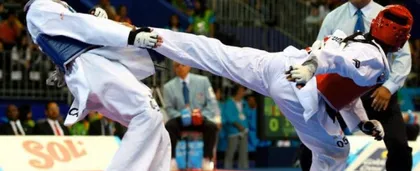
History of taekwondo in Nigeria
From a 1975 school to Olympic podiums.Read more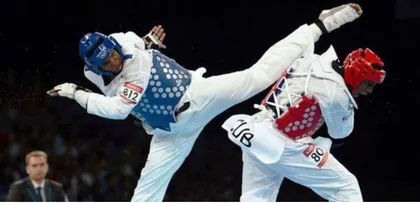
Contact the NTF
Nigeria Taekwondo Federation.Read more
Quick answers
Taekwondo careers in Nigeria: your questions
How do I get into the Nigerian taekwondo team?
Train at a club inside the national system, compete at state and national events, and attend the Nigeria Taekwondo Federation's national open trials. In May 2026 more than 300 athletes attended trials in Abeokuta, and athletes were picked for the African Championships in Bamako.
Has Nigeria won an Olympic medal in taekwondo?
Yes. Chika Chukwumerije won bronze in the men's +80kg at Beijing 2008, Nigeria's only Olympic taekwondo medal. Emmanuel Oghenejobo also won silver in the 1992 demonstration event.
What is the difference between poom and dan?
Both are Kukkiwon black belt ranks. Poom ranks are for children under 15, and dan ranks start at 15. To apply for a 1st dan a student must be at least 15 and have trained at least six months from the 1st kup.
Can you make a living from taekwondo in Nigeria?
Not from competing. No salaries or prize money for Nigerian events are published, and Chika Chukwumerije has said taekwondo lacks the funding some federations enjoy. Most people earn from the sport by teaching, coaching and running clubs.
What is poomsae?
Poomsae is the forms event of taekwondo, a set pattern of techniques judged on accuracy and presentation. It is a separate competition from kyorugi, the fighting event. Haruna Usman won poomsae gold for Nigeria at the 2026 African Championships.
Is there para taekwondo in Nigeria?
Yes. The Nigeria Taekwondo Federation selected para athletes at its 2026 open trials, and Ability Mathew Udom won para taekwondo gold at the 2026 African Championships in Bamako.
When are the next big taekwondo events for Nigerians?
The Youth Olympic Games in Dakar, Senegal, run from 31 October to 13 November 2026 and include taekwondo. The next African Games are in Cairo from 20 January to 7 February 2027, and the next Olympics are Los Angeles 2028.